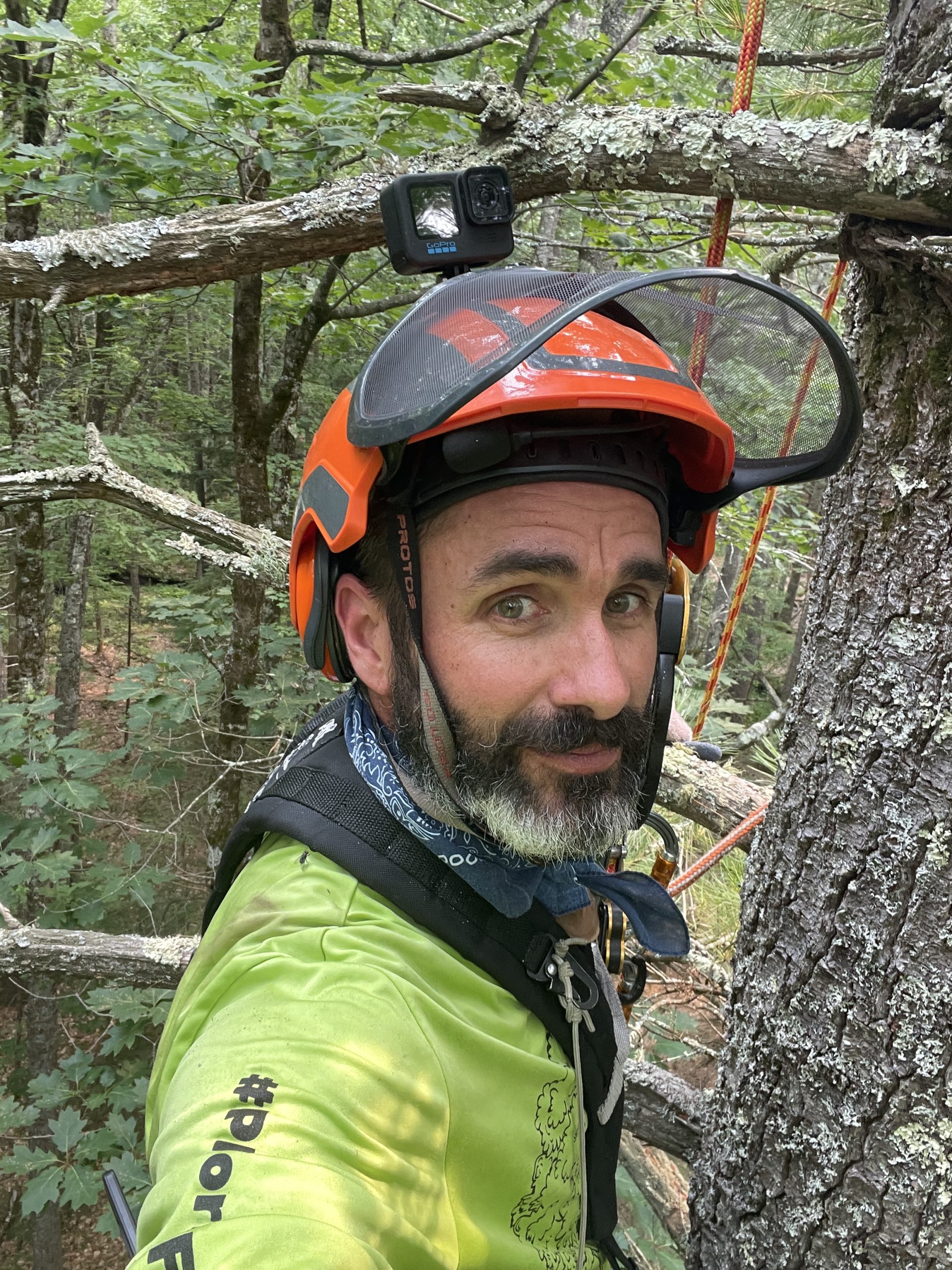
White Pine – Softwood
July 14, 2026 near Old Orchard Maine
Maine: the most heavily forested state in the U.S.
Over 89% of Maine’s land is covered by forests. About 90% of this land is privately owned, featuring the largest contiguous area of privately owned forest in the U.S.. Maine contains the largest unfragmented temperate broadleaf/mixed forest in the nation. It sustains the largest lynx population in the lower 48 states and 90% of the remaining native brook trout habitat in the eastern U.S..
The timber and forest products industry generates over $8 billion annually, supporting 29,000 workers across the state. The softwoods (like spruce and fir) and hardwoods (like maple, birch, and oak) supply paper, structural lumber, and specialty wood products.
Maine’s forests offset at least half of all the carbon dioxide emitted annually by the state’s cars, homes, and businesses. Over 7.6 million acres are certified as sustainably managed.
The White Pine, Pinus strobus, is the state tree of Maine. In fact the tree is the focal point of the state flag! (both the old and new versions of the flag)
In the era when the oceans were traveled by sail, the White Pine trees of Maine produced valuable spars. The spar was arguably the most important part of the ship because it held the sails straight up to catch the wind.
For my climb I traveled to Sewell Woods along the southern coast of the state. Sewell Woods is a 35 acre property donated to Scarborough Land Trust in 1996 by Albert G. Sewell.
In 1918, Albert Sewell established Sewell Woods Products, a company which grew to have mills in Gorham, Waldoboro, and Bridgton. White pine and balsam fir were harvested and sold directly on the market. Spruce, oak, maple, beech, and birch trees were used in the manufacturing of shingles, ladders, shoe racks, lawn chairs, camp stools, and lobster traps.
I selected a tall specimen and got my rope into the canopy. Although I was only about 2 miles from the Atlantic ocean the forest reminded me of the central Appalachian forests. When I returned to the forest floor from my climb I enjoyed a huckleberry snack.
Maine’s forests are facing similar threats seen in other eastern states; hemlock woolly adelgid, emerald ash borer, Beech leaf disease. These non-native insects (and nematodes) are posing a serious risk to our native trees.
While there may never be a “solution” to this problem, it is my hope that we can learn from the situation. We must be more diligent and careful with international trade or we will continue to introduce non-native threats to our forests.