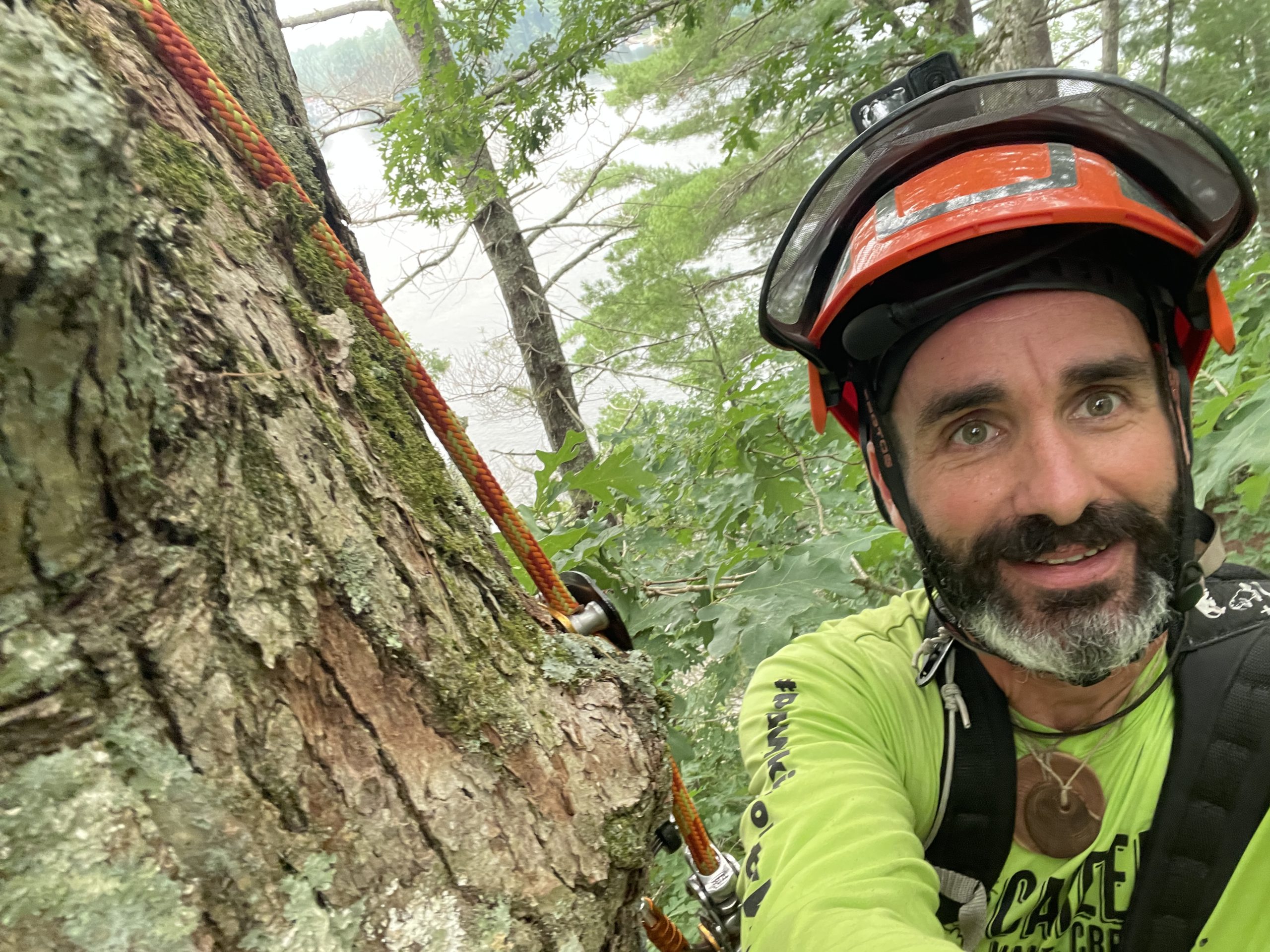
The White Oak – Hardwood
July 15, 2026 Quaddick State Park.
Connecticut: where American independence began with a tree.
The legend of the Charter Oak is Connecticut’s most famous political folktale. It tells the story of how Captain Joseph Wadsworth supposedly hid Connecticut’s Royal Charter inside a massive, hollow white oak tree in Hartford on Halloween night in 1687 to protect the colony’s self-governing rights from the British.
When I first read about this I assumed it was a typo because this is 100 years before the American revolution!
The actual Charter Oak came down in a storm in the 1850’s but the tree is remembered by having chosen the White Oak as the state tree of Connecticut. A great choice!
Historically White Oak lumber was essential for ship building. My understanding is this was more for the “bones” for framing the ship as well as decking. Ship builders would seek out trees with natural curves that exactly met the needs of the curves of a ship.
The lumber of White Oak is naturally waterproof because of a substance called “tilosis” at the cellular level. Only White Oak has these characteristics which is why the lumber is so prized for wine and whiskey barrels.
There is growing concern about White Oaks not regenerating at the rate we foresters would like to see. It is unclear why this is the case but throughout the Appalachian Mountains the young Oak are just not being seen. I recently heard about “The White Oak Initiative” which is putting effort into solving this mystery.
Another serious challenge relating to our nation’s forests relates to tick-bore illnesses. Lyme disease may be the most well known. Scientific evidence suggests the bacteria which causes this illness has been around for thousands of years, however, it was first diagnosed and named in Old Lyme Connecticut. Confirmed cases of Lyme disease have been reported in all 50 US states.
Many foresters promote prevention; long shirts and pants, duct tape pant legs to your boots, use of tick repellant. I’m also a fan of promoting a healthy-balanced forest ecosystem with lots of predators. Mice are the main host for ticks.
A landmark study by researchers at the University of Maryland highlighted the profound ecological role of snakes in managing tick populations. A single adult timber rattlesnake removes an estimated 2,500 to 4,500 ticks from the ecosystem each year by consuming their small mammal hosts!
As I have been singing in my song “Rattlesnake” for years…”the only good snake is a live one.”
I also recommend getting rid of the non-native plant Japanese Barberry whenever possible. Japanese barberry creates an ideal microclimate for blacklegged (deer) ticks and white-footed mice. Its dense thickets maintain high humidity and shade, letting ticks quest longer and protecting mice that carry Lyme disease. Clearing this invasive shrub reduces local tick abundance by nearly 60%.